
Polishing Compound Comparison: How to Choose the Right Product for Your Auto Care Business
A proper polishing compound is a cornerstone product for any professional in the automotive care industry. Whether you run a detailing shop, manage a fleet, operate a paint-and-body repair facility, or distribute automotive maintenance supplies, understanding the differences between polishing compounds — and how those differences affect performance, cost and customer satisfaction — is essential. This polishing compound comparison explains the technical categories, performance metrics, application practices, and business considerations you should weigh when selecting compounds for everyday use or for resale.
What a polishing compound does (brief technical overview)
Polishing compounds are abrasive formulations designed to remove surface defects (scratches, oxidation, swirl marks, and sanding marks) and to restore gloss on automotive paint. They combine abrasives (micron-sized particles), binders, lubricants and sometimes additives for leveling or enhanced gloss. The abrasives do the material removal; the binders control abrasive suspension and load; lubricants reduce heat and protect the surface during polishing. The result you get depends on abrasive type and size, carrier chemistry, and how the compound is applied.
Key categories in a polishing compound comparison
1. Cutting (Heavy-Cut) Compounds
- Purpose: Remove deep scratches, severe oxidation, and heavier machine marks.
- Characteristics: Larger abrasive particles, higher aggressiveness, leaves more haze.
- Typical use case: Initial stage of multi-step correction on severely damaged panels.
2. Medium-Cut / Polishing Compounds
- Purpose: Bridge between heavy cut and finishing — reduces moderate defects while beginning to restore gloss.
- Characteristics: Mid-sized abrasives, balanced cut and finish.
- Typical use case: Single-step correction on moderately weathered paint.
3. Finishing / Mirror-Finish Compounds
- Purpose: Deliver high gloss, clarity and very fine surface refinement.
- Characteristics: Very fine abrasives or chemical polishers with minimal cutting.
- Typical use case: Final step for showroom finishes and mirror-like clarity.
4. One-Step Compounds
- Purpose: Combine some degree of cutting and finishing to save time.
- Characteristics: Compromise between correction and gloss; ideal for lightly worn finishes and time-sensitive jobs.
Performance metrics to compare
When evaluating products in a polishing compound comparison, consider these objective metrics: material removal (how quickly and predictably it removes defects), final gloss (measurable with gloss meters), residue behavior (ease of wipe-off), dusting and sling (cleanliness during rotary/polisher work), heat generation (important for modern thin clearcoats), and pad compatibility. Real-world testing using consistent pads, machines and substrate panels is essential to produce meaningful comparisons.
Application variables that affect outcomes
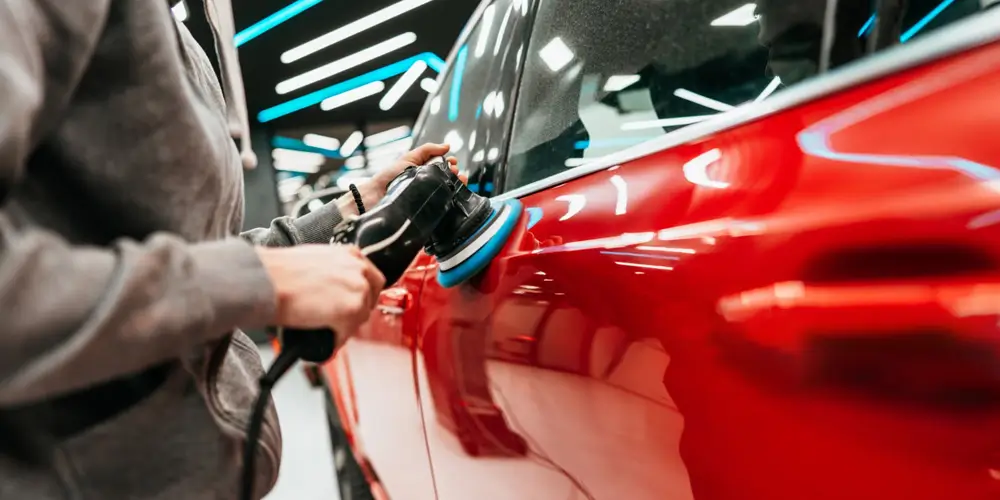
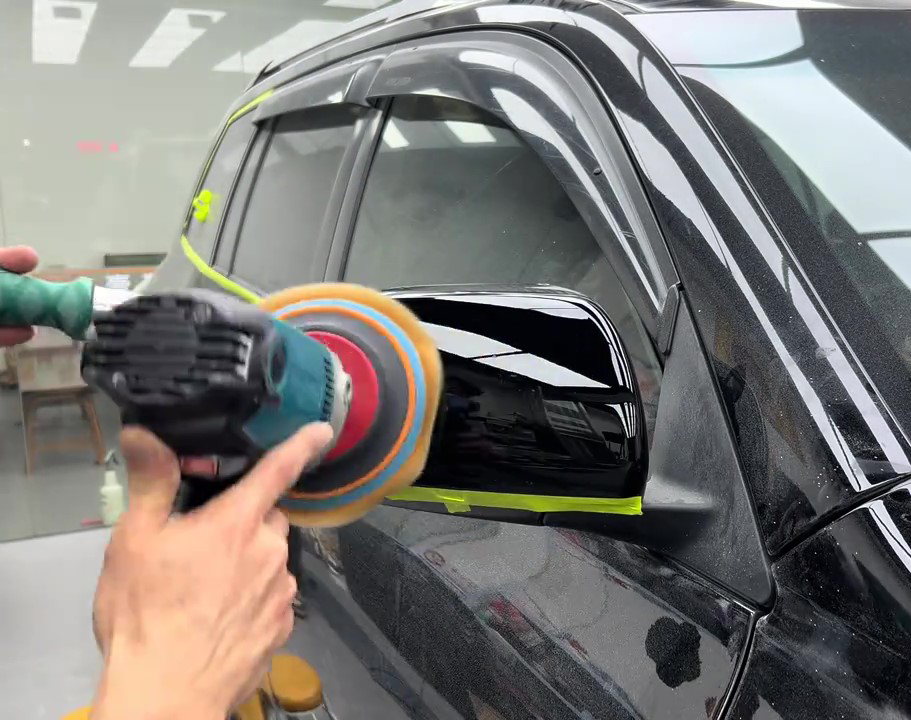
A polishing compound’s apparent performance can be changed dramatically by the pad type (cutting/wool vs. foam), machine type (rotary vs. dual-action), technique (pressure, speed, pattern), and technician skill. That is why professional testing protocols standardize these variables to compare compounds fairly.
Safety and product compatibility
Modern paint systems, particularly thin OEM clearcoats, are more sensitive to aggressive polishing than in the past. A thorough polishing compound comparison should include safety testing on manufacturer paint systems to confirm no burn-through, color shift or edge abrasion, especially when using heavy-cut compounds and rotary machines.
Cost vs. value: the distributor perspective
Price-per-liter is only one side of the equation. For distributors and detailing shop owners, total cost of ownership matters: how many panels can be serviced per unit, frequency of returns/complaints, and perceived finish quality by end-customers. A lower-cost compound that leaves poor finish or requires extra steps can be more expensive in labor and reputation. Conversely, a competitively priced compound that delivers near-brand-level performance delivers superior margin and market opportunity.
Why SYBON belongs in your polishing compound comparison
SYBON is a China-based professional manufacturer of automotive polishing compounds and related auto-care products. We produce a range of formulas that cover heavy-cut, medium-cut, finishing and one-step options designed for modern paint systems and professional workflows. In a direct polishing compound comparison against established international brands, SYBON’s formulations deliver comparable performance in material removal, gloss restoration and finish clarity — while offering a more competitive cost structure.
1.Quality parity, cost advantage
Although SYBON’s brand recognition may be smaller than legacy international labels, our R&D, production controls and QA processes ensure product consistency and performance that align closely with high-end alternatives. This allows distributors, resellers and shop owners to offer end customers exceptional finish quality while improving margins. If your priority is to buy polishing compound wholesale with a favorable price-to-performance ratio, SYBON is built to meet that need.
2.Support for agents and distributors
SYBON actively recruits global agents and distributors. We provide product samples for evaluation, technical guidance for correct product selection and application, and responsive after-sales support. We position ourselves not simply as a supplier but as a partner who helps distributors win local market share by offering high-quality products at competitive prices. By choosing SYBON, you gain access to a product line tailored for professional detailing, body shops and fleet maintenance — supported by training materials and customer service.
3.Commercial proposition and next steps
If you are a distributor, paint shop owner, detailing business or fleet manager interested in testing SYBON’s polishing compounds, request samples through our website contact form or email. We welcome trial evaluations and will respond within 24 hours to inquiries submitted through our site. Partnering with SYBON provides an opportunity to introduce a highly cost-effective alternative to premium brands, increase profit margins, and strengthen your service offering in a competitive local market.
Conclusion
A robust polishing compound comparison evaluates technical performance, application compatibility, safety on modern finishes, and total cost of ownership. For businesses that require professional results without paying a premium brand markup, SYBON offers a compelling balance of performance, price and distributor-oriented support. If your objective is to buy polishing compound wholesale with strong margins and reliable quality, SYBON should be a primary candidate in your supplier shortlist. Contact us for samples and distributor terms — let SYBON help you elevate your product lineup and grow your business.
Source of this article:https://www.sybonbest.com
Get to know us through more channels: