
Polish or Compound After Car Paint — When to Use Each and Why It Matters
Deciding whether to polish or compound after car paint is a common question for detailers, body shops, fleet managers and auto dealers. The correct choice affects final appearance, paint longevity and customer satisfaction. This article explains the practical differences between compounding and polishing, when each method is appropriate after a paint job, and why selecting the right product and process — including high-quality compounds and pads — is essential. Finally, we introduce SYBON, a professional polishing compound manufacturer that offers high-performance products with competitive pricing and reliable service for distributors and detailers.
Understanding the difference: compound vs polish
Compounds and polishes are both abrasive finishing products, but they serve different functions:
1. Compound (cutting compound) is more abrasive. It is formulated to remove significant surface defects such as sanding marks, heavy swirl marks, oxidation, overspray, and P1200–P2000 sanding scratches. Compounds abrade the paint surface to level and remove defects rapidly, leaving a duller finish that requires refinement.
2. Polish (finishing polish) is less abrasive and designed to refine and enhance the gloss after compounding. Polishes remove light defects (micro-scratches, haze) and restore clarity, depth and mirror-like shine. They refine the paint surface and prepare it for sealants, wax or ceramic coatings.
Knowing the mechanical difference between the two helps you choose the right step after a paint job. The common workflow for a respray or repaired panel is: wet-sanding (if needed) → compound (to remove heavier defects) → polish (to refine and amplify gloss) → protection (sealant/coating).
Timing: how soon after paint should you polish or compound?
Freshly painted surfaces require careful handling. Newly applied paint and clear coats go through a curing process during which solvents evaporate and the film hardens. The appropriate timing to perform mechanical correction depends on the paint system, ambient conditions and the painter’s recommendations.
For modern multi-stage systems with clear coats, many pros perform light polishing after paint is tack-free and dry to the touch but prefer to wait until the paint has sufficiently cured before aggressive compounding. In practice this means assessing each job individually and consulting the paint manufacturer or the shop’s paint technician.
If you must perform defect removal soon after painting, use very light-cut products and conservative technique — or let the painter perform the compounding before final bake and finish procedures.
Because cure time varies widely, the best practice is conservative: prioritize paint integrity (and the manufacturer’s guidance) over immediate polishing. When in doubt, communicate with your paint supplier or the performing technician.
Choosing the right product and method
Several practical points determine whether to compound or polish:
- Defect severity: Deep sanding marks and heavy swirls → compound. Light haze or micro-scratches → polish.
- Paint type: Single-stage paints, basecoats with thin clearcoats and older finishes respond differently; clearcoat systems usually accept compounding/polishing better than older single-stage finishes.
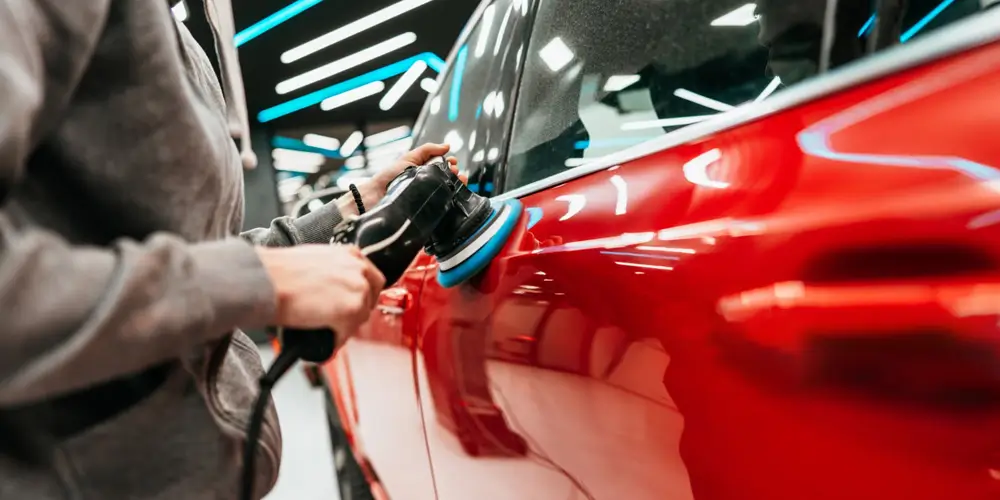
- Machine & pad selection: Use appropriate pads (cutting vs finishing) and machines (rotary for aggressive cutting — by experienced operators, dual-action for safer, general use). Pad and compound synergy is as important as the compound itself.
- Technique: Moderate pressure, correct RPM, and systematic passes with clean, conditioned pads reduce heat and risk to the paint. Finish with a lower-aggression polish and inspect under proper lighting.
Safety and quality control
Always test in an inconspicuous area. Use LED or halogen inspection lights to evaluate defect removal and surface finish. Over-compounding can thin the clear coat; keep track of how much paint is being removed during aggressive correction. For large-scale or high-value vehicles, many shops use paint thickness gauges (FTG/Paint Depth Gauges) to monitor material removal.
Why product choice matters for distributors and detailers
The difference between a satisfactory result and a repeat job often comes down to product quality and cost-effectiveness. Distributors, shop owners and agents need reliable compounds that deliver consistent cutting and refining performance, excellent compatibility with common pads and machines, and predictable results across multiple paint systems.
SYBON — professional polishing compound manufacturer you can rely on
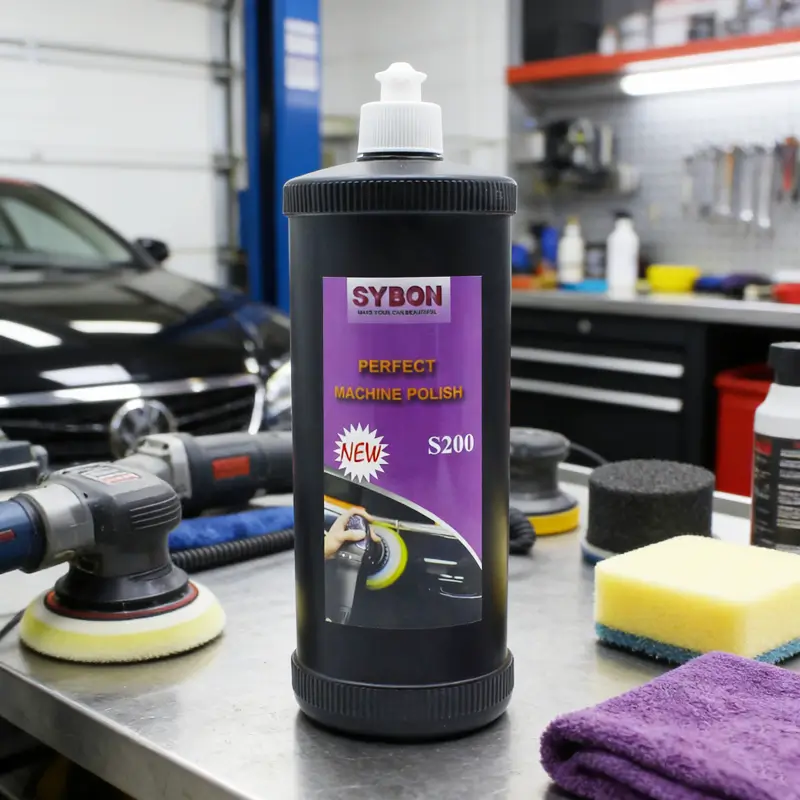
SYBON is a China-based professional manufacturer and distributor of automotive polishing compounds and related car care products. We supply high-performance polishing compounds that match the quality of major international brands while offering a more economical price point. SYBON’s product range is engineered for detailers, body shops, fleet owners, dealers, and repair shops — especially those seeking high value without the premium branding cost.
Key selling points:
- Comparable quality to big brands: SYBON formulations are designed to deliver similar cutting power, refining ability and final gloss to well-known industry names.
- Competitive price and high cost-performance ratio: Lower input costs for distributors and resellers allow improved margins and easier market entry.
- Product breadth: From heavy-cut compounds to fine polishes and supporting pads/accessories, SYBON supplies the full workflow.
- Service and partnership: SYBON supports distributors, agents and shop owners with product samples for testing, marketing support and responsive after-sales service.
- Global partner recruitment: SYBON is actively seeking worldwide agents and distributors. We welcome body shop owners, detailers and automotive supply distributors to request samples and test our product quality.
If you are an agent, paint shop owner, garage proprietor or distributor interested in expanding your product offering with dependable, cost-effective polishing compounds, SYBON is ready to partner with you. Request samples for evaluation — we are committed to timely response and will contact you within 24 hours after you reach out via our website. SYBON may not yet have the same brand recognition as some global majors, but our performance and value proposition make us a powerful option for companies looking to grow their local market share and improve margins.
Conclusion
Whether to polish or compound after car paint depends on defect severity, paint type and cure state. Compounding corrects heavier defects; polishing refines and restores gloss. For professionals, the right combination of technique, pads and reliable compounds is essential. SYBON provides high-quality, cost-effective polishing compounds and full technical support to help distributors, detailers and repair shops achieve superior results and grow their businesses. If you want to test a reliable, economical alternative to big-brand polishing compounds, contact SYBON through our website for samples and partnership information — we look forward to working with you.
Source of this article:https://www.sybonbest.com
Get to know us through more channels: