

Do you wet sand before polishing?
“Do you wet sand before polishing?” — it’s one of the most common questions detailers, bodyshops, and DIY car enthusiasts ask when restoring or perfecting automotive paint. The short answer: sometimes — and only when the paint condition and the desired result require it. Below I’ll explain the industry reasoning, when and how wet sanding is used, the risks and best practices, and finally introduce SYBON — a professional manufacturer of polishing compounds — and explain why SYBON is an excellent partner for wholesalers, distributors, and detail shops.
Industry knowledge: understanding wet sanding before polishing
Wet sanding (also called “water sanding”) is the process of using very fine-grit sandpaper (commonly 1000–3000 grit) with water (or a lubricant) to flatten and remove surface defects like orange peel, heavy scratches, or severe clearcoat imperfections. It physically levels high spots and removes thin amounts of clearcoat so that polishing can remove sanding marks and restore gloss.
Key reasons to wet sand before polishing:
- Severe texture or orange peel: When factory or repainted panels have pronounced texture, wet sanding reduces the peaks so a polishing step can produce a mirror finish.
- Deep scratches or paint runs: Some defects are too deep for compounding alone; wet sanding lowers the defect so polishing can finish the surface.
- Preparing for high-gloss finishes: For show-quality or high-reflectivity paintwork, wet sanding is often part of the multi-step refinement.
However, wet sanding is not always necessary. Many modern polishing compounds and pads can remove light to moderate defects without sanding. Wet sanding is an advanced corrective step and should be used only when compounding/polishing alone cannot achieve the desired result.
When you should not wet sand
- Minor swirls and light scratches: These are best handled by polishing and finishing compounds.
- Thin or aged clearcoat: Wet sanding can easily remove too much material and compromise paint protection.
- Untrained operators or rushed jobs: Wet sanding requires skill, patience, and a knowledge of paint thickness — mistakes can be expensive.
Tools, grits, and workflow
A typical workflow that includes wet sanding:
1. Assess paint thickness and defects. Use a paint thickness gauge when possible. If the clearcoat is thin, avoid wet sanding.
2. Start with the least aggressive method. Try machine polishing with a medium-cut compound first.
3. If needed, wet sand with progressively finer grits. For deep orange peel you might start at 1500–2000 grit and finish at 3000 grit depending on the paint. Keep the surface constantly lubricated.
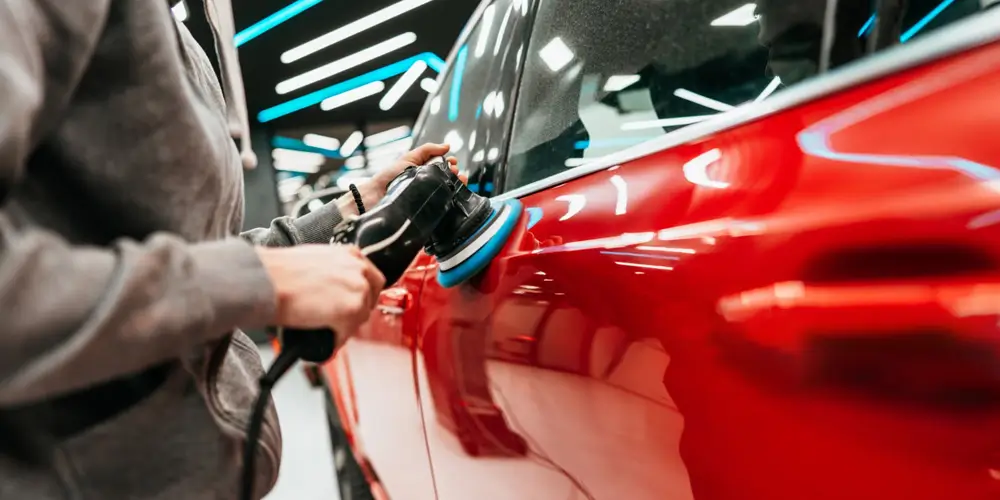
4. Polish out sanding marks. Use a cutting compound with a wool or heavy-cut foam pad, then refine with finishing polish and a soft finishing pad.
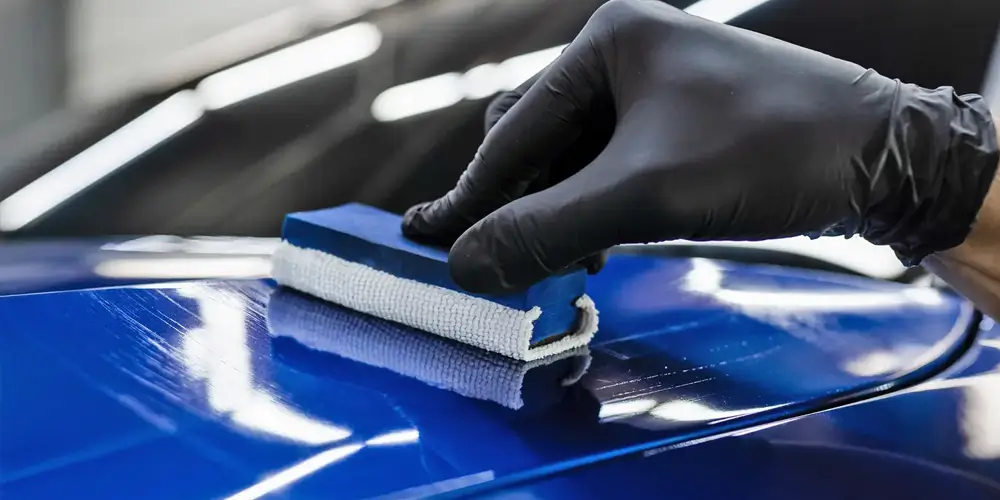
5. Protect the finish. After polishing, apply a sealant or wax to protect the freshly refined surface.
Risks and tips
- Always test in an inconspicuous area first.
- Keep sanding moves even and don’t linger in one spot.
- Rinse frequently and change paper as it loads with paint residue.
- Consider professional help for expensive or rare vehicles.
SYBON — professional polishing compounds and support for wholesalers
SYBON is a China-based professional manufacturer of automotive polishing compounds and related automotive care products. We specialize in producing high-performance polishing compounds that suit both professional bodyshops and independent detailers. Our customers who test our products frequently report excellent results — strong defect removal, smooth finishes, and reliable compatibility with common polishing machines and pads.
Why choose SYBON for buying polishing compound wholesale?
- Low minimum order quantities (MOQ): We support low-MOQ wholesale to make it easy for small distributors or new agents to test and stock our products without large upfront commitments.
- Competitive pricing: Compared with major international brands, SYBON offers more affordable pricing while delivering quality that’s comparable to big brands. That means higher margins for distributors and a better price point for local markets.
- High-quality performance: SYBON’s polishing compounds are formulated to provide powerful cutting when needed and a fine finish when paired with finishing polishes — meeting the expectations of professionals and enthusiasts alike.
- Comprehensive product range: Beyond cutting and finishing compounds, we produce a suite of automotive care products to help agents and shops offer a complete solution to their customers.
- After-sales support: We stand behind our products with responsive customer service. If you’re an agent, paint shop owner, or repair center interested in becoming a distributor, we welcome sample requests for testing.
SYBON may not be as globally famous as some legacy brands, but our quality is comparable, and our cost-effectiveness and product support often make us the smarter choice for local businesses looking to compete. If high brand prices are keeping you from stocking the products your customers want, SYBON is the partner that provides quality without the premium price tag.
Invitation to partners & how to contact us
SYBON is actively seeking global agents and distributors. We are ready to collaborate with agents, distributorships, auto dealerships, paint shop owners, and repair shop managers. If you want to test our polish and see how it performs in your market, request samples — we’re happy to supply them for evaluation.
To get started: please send us an inquiry through our website contact form or email us directly. We will contact you within 24 hours to discuss product samples, pricing, and partnership possibilities. Whether you need polishing compound wholesale or a full line of automotive care products, SYBON offers high performance, fair pricing, and reliable after-sales service to help you grow your business.
In short: do you wet sand before polishing? Sometimes — only when the defect severity or texture requires it. For most swirl and scratch correction, professional polishing compounds (such as those supplied by SYBON) combined with the right pads and technique will do the job. If you’re a business looking for a dependable supplier of polishing compounds and automotive care products, consider SYBON: high-quality formulations, competitive wholesale pricing, low MOQs, and a partner-oriented approach designed to help you open and grow your local market.
Source of this article:https://www.sybonbest.com
Get to know us through more channels: