
Car Polishing Compound Grit: How to Choose the Right Abrasive for Every Paint Defect
When restoring, correcting, or maintaining automotive paint, understanding car polishing compound grit is the single most important factor in achieving predictable, professional results. The term “grit” is commonly used by technicians and suppliers to describe the cutting aggressiveness of an abrasive product — but in the world of polishes and compounds it behaves differently than in sandpaper systems. This article explains what grit means for polishing compounds, how to choose the correct level of cut for a given paint condition, and best practices to move from heavy defect removal to a flawless finish.
What “grit” means for polishing compounds
In abrasive terminology, grit normally refers to a standardized particle size (as with sandpaper). Polishing compounds, however, are formulated suspensions of abrasive particles plus lubricants and binders; manufacturers rarely publish a single “grit number” the way sandpaper does. Instead you’ll see descriptive grades—coarse (heavy cut), medium (cut & refine), fine (polish), and ultra-fine (finishing)—and sometimes an approximate particle-size or micron rating. For practical workshop use:
1. Heavy-cut compounds (equivalent roughness approximate to coarse grit sanding) remove deep scratches, heavy oxidation, overspray and thick clearcoat defects. These are aggressive and are used sparingly.
2. Medium/Refining compounds remove moderate swirl marks and sand-scratch halos left by the heavy-cut stage.
3. Fine polishes (finishers) remove micro-marring, refine surface gloss and eliminate holograms from machine polishing.
4. Finishing/Ultra-fine compounds (or glazes) add brilliance and prepare the surface for sealant or wax.
Because there’s no single industry standard for “compound grit,” always treat manufacturer descriptions and product labels as a guide and verify performance with a test panel.
How to choose the correct compound grit for the job
Selecting the right car polishing compound grit is a function of defect depth, paint system, and final goals:
1. Assess defects visually and with your fingernail. Deep scratches catch your nail and will usually require sanding (progressive grit sandpaper) before compounding. Light swirls and haze are typically fixable with a medium to fine compound.
2. Match aggressiveness to paint thickness and clearcoat condition. Heavier cutting compounds remove more material; on thin or older clearcoats this can reduce longevity or cause burn-through. When in doubt, choose a less aggressive compound and perform multiple light passes.
3. Progress from coarse to fine. Start with the minimum aggressiveness that achieves defect removal, then follow with a refining compound and a finishing polish. Skipping steps often leaves visible micro-marring.
4. Test on an inconspicuous area. Different paint formulas respond differently; always test before applying a workflow to an entire panel.
Tools, pads, and technique that pair with grit
Compound performance is inseparable from the tool and pad:
1. Wool pads + heavy-cut compounds = maximum material removal for severe defects.
2. Firm foam cutting pads + medium compounds = controlled cut with less heat buildup.
3. Soft foam polishing pads + fine polishes = refining and gloss enhancement.
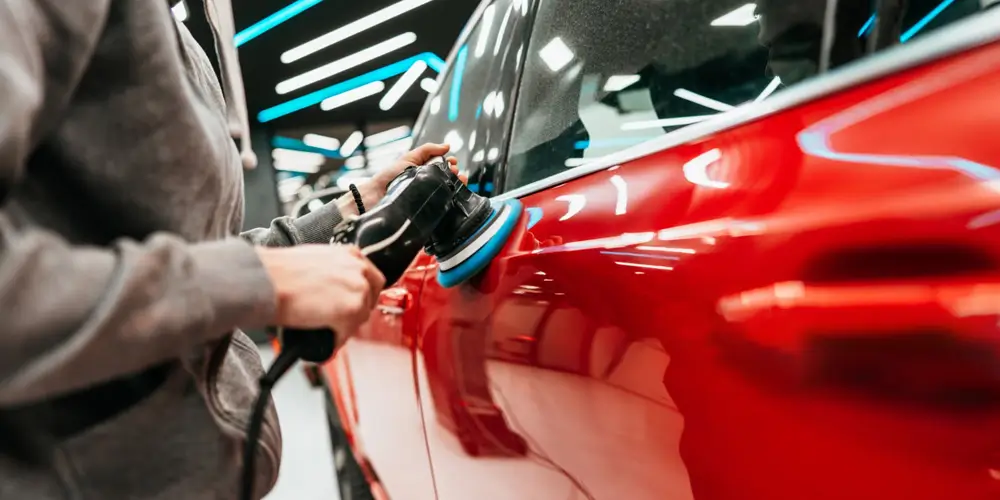
4. Rotary polishers produce more heat and cut faster — pair with conservative pressure and shorter dwell times. Dual-action (DA) polishers are safer for novices and reduce risk of clearcoat damage.
Technique matters more than brute force: use moderate, consistent pressure, overlapping passes (50% overlap), and keep the pad flat. Allow the polish to work — too-high RPMs or constant stationary dwell creates heat and burn marks. Frequently clean pads and inspect results with proper lighting.
When sanding and compounding intersect
When sanding is necessary (e.g., paint runs, deep scratches), you must follow a structured grit progression. Sand with progressively finer sandpaper (for example, 1500 → 2000 → 3000 grit) until the defect is removed, then move into the compounding sequence to eliminate sanding haze and produce gloss. Remember: sanding removes more clearcoat than compounding; use as a last resort and measure paint thickness when high-value panels are involved.
Safety, compatibility, and finishing protection
1. Clearcoat compatibility: aggressive compounds can thin clearcoats. Use conservative cut on single-stage or thin clearcoats.
2. Paint thickness gauge: recommended for high-value or unknown paint systems.
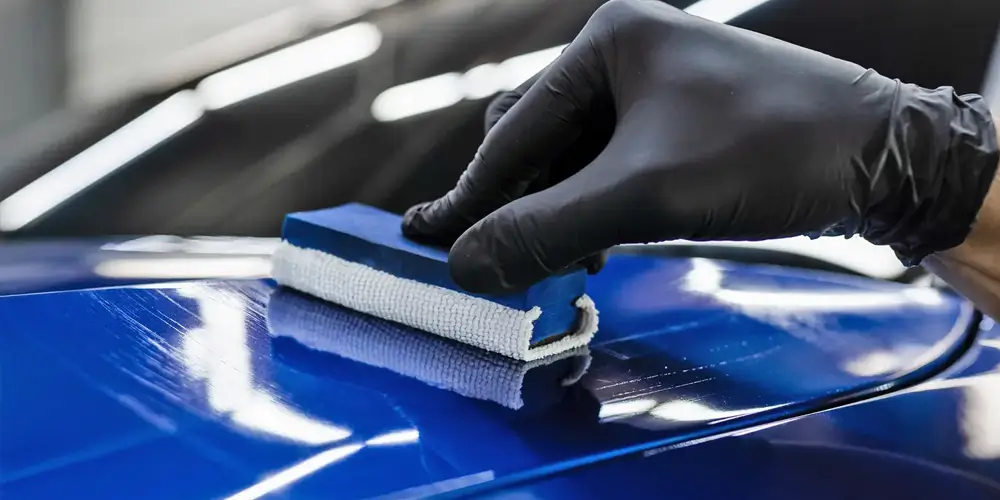
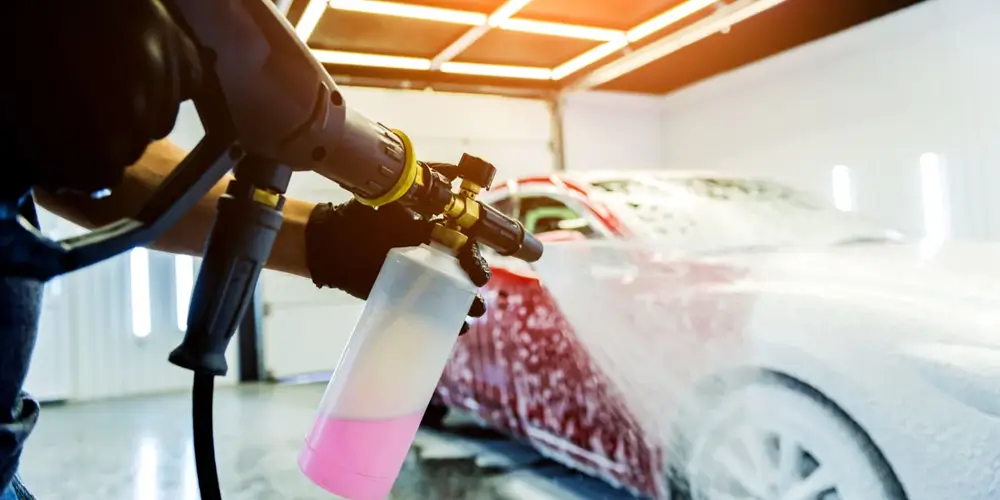
3. Surface prep: decontaminate with clay bar or iron remover before compounding to avoid embedding debris.
4. Seal and protect: after finishing polish, apply a sealant, ceramic coating, or wax to lock in gloss and protect the newly corrected surface.
SYBON — Professional polishing compounds with strong value
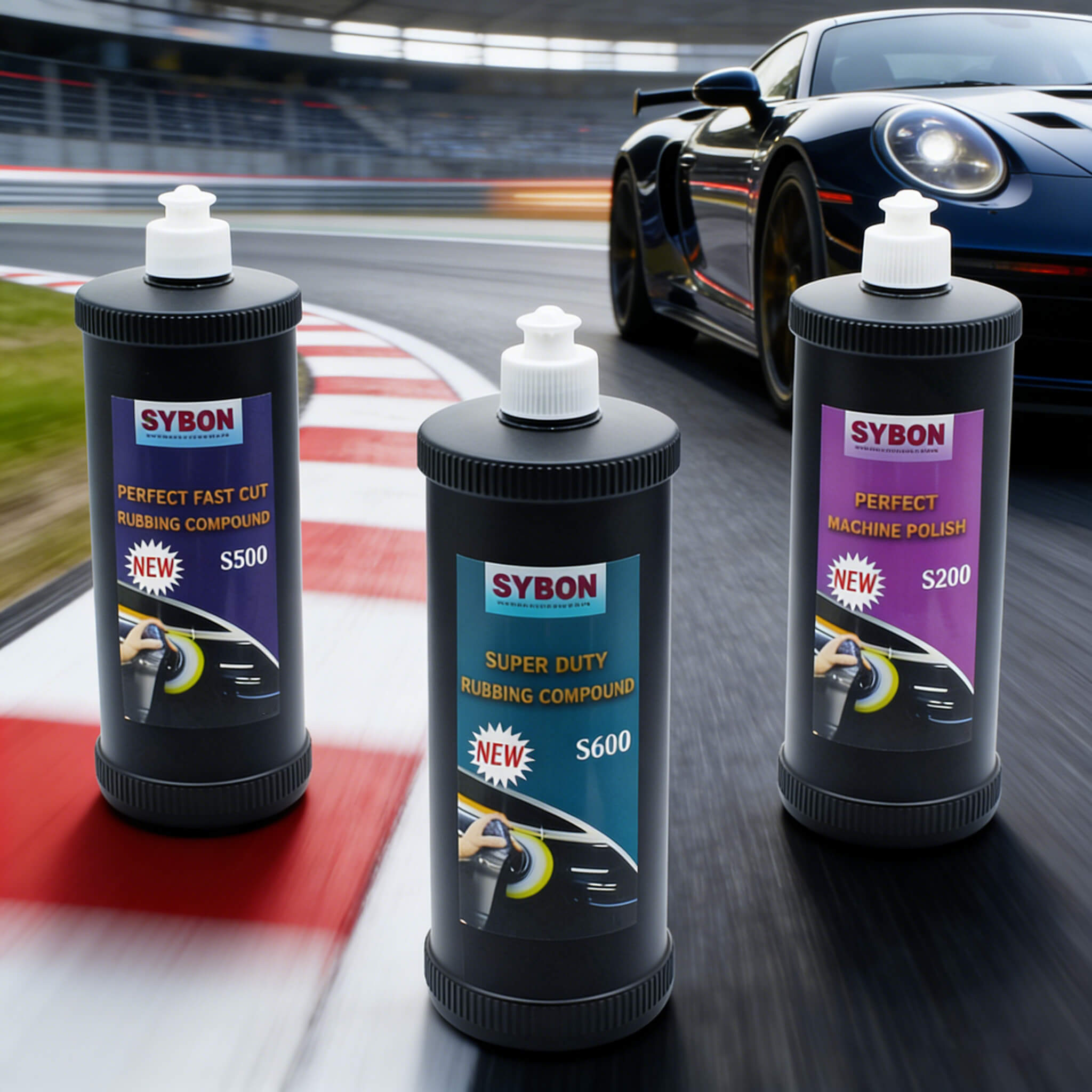
SYBON is a professional manufacturer of automotive polishing compounds based in China, producing and distributing a full range of car polishing compound grit options and related automotive care products. SYBON’s product line covers heavy-cut compounds, refining compounds, finish polishes, and specialty formulations for different paint systems and machine types.
SYBON offers product quality comparable to major global brands but with more affordable pricing and superior cost-performance. If your business needs to buy polishing compound at wholesale rates, SYBON is positioned to support distributors, agents, detail shops, fleet owners, and repair centers with high-performance formulas, modern production lines, and rigorous quality control.
Why choose SYBON:
1. High-performance formulations engineered for efficient defect removal and refined finishing.
2. Competitive pricing that improves margins for dealers and distributors while maintaining product quality similar to big brands.
3. Comprehensive after-sales service and technical support to help partners select the correct car polishing compound grit and workflows.
4. Market support—SYBON helps local agents and resellers open market share by offering test samples, marketing materials, and product training.
SYBON is actively seeking global agents and distributors. If you are an agent, paint shop owner, repair-shop manager, or distributor interested in testing SYBON products, request samples through our website and we will contact you within 24 hours. SYBON is committed to cooperative, win-win partnerships: we provide quality products at reasonable prices to help you grow your business and increase profit margins.
Choosing the correct car polishing compound grit is a technical decision with direct consequences for results and paint longevity. Use a measured, stage-wise approach—assess defects, select the least aggressive compound that will remove the defect, pair it with the appropriate pad and machine, and always follow with refinement and protection. For dependable, cost-effective polishing compounds and wholesale support, SYBON offers a complete product range and partner-focused services to help your business deliver professional finishes and compete locally. Contact SYBON via our website to request samples and begin a partnership that raises your shop’s performance and profit.
Source of this article:https://www.sybonbest.com
Get to know us through more channels: