
Compound Wax Polish Steps: A Practical Industry Guide for Professionals
Understanding the correct sequence and technique for compounding, waxing, and polishing is essential for achieving durable, showroom-quality paint finishes. This article explains the technical rationale behind each stage, outlines safe and repeatable compound wax polish steps, and describes how SYBON — a professional polishing compound supplier — can support bodyshops, detailers, distributors, and resellers with high-performance, cost-effective products and dependable service.
Industry background: why the order matters
Automotive paint refinishing and corrective polishing typically follow a three-stage workflow: compound → polish → wax/sealant. Each stage has a distinct purpose:
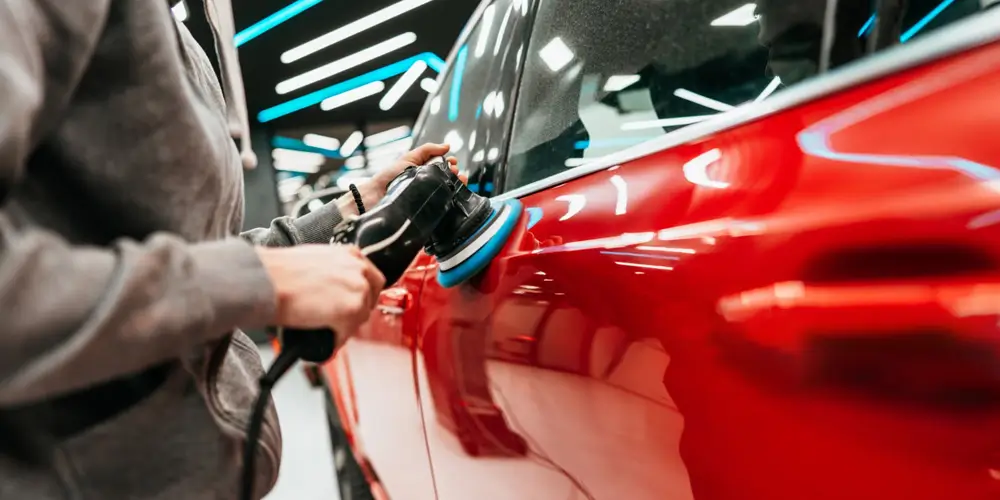
1. Compounding removes medium-to-heavy defects (deep scratches, heavy oxidation, overspray, and orange peel) by using an abrasive paste and an aggressive pad or rotary/polisher setting. Compounds must be formulated for controlled cut while minimizing heat and swirl marks.
2. Polishing refines the surface after compounding. Polishes use finer abrasives and lubricants to remove micro-marring and restore gloss. This stage transitions the finish from “cut” to “smooth and reflective.”
3. Waxing / sealing applies a protective layer that enhances depth and hydrophobicity, protecting the corrected finish from environmental contaminants and UV degradation.
Following the correct compound wax polish steps is not merely procedural — it optimizes material performance, reduces rework, and extends the life of the corrected finish. The correct combination of compound formulation, pad selection, machine speed, and operator technique determines final appearance and durability.
Key variables that influence results
1. Abrasive grade and carrier: Compounds differ by abrasive type (alumina, silica, etc.), abrasive size distribution, and carrier chemistry. These determine cutting speed, heat generation, and residue removal.
2. Pad selection: Wool or aggressive foam for cutting; medium-foam for polishing; soft foam or microfiber for finishing and waxing. Pad condition and cleanliness greatly affect outcome.
3. Machine choice and settings: Rotary polishers provide strong cut but require skilled operators. Dual-action (DA) polishers are safer for general use and reduce the risk of burn-through. RPM and applied pressure must be matched to pad and compound.
4. Paint system and thickness: Modern clearcoat systems have varying hardness and layer thickness — always measure or consult OEM data if heavy correction is planned.
5. Surface preparation: Cleanliness (decontamination of iron particles, tar removal, and claying) is essential before compounding to avoid embedding abrasive particles and causing unintended scratches.
Recommended compound wax polish steps (professional workflow)
Below is a repeatable, professional-level set of compound wax polish steps intended for use by trained technicians. Adapt parameters to paint system and product datasheets.
1. Inspect and document
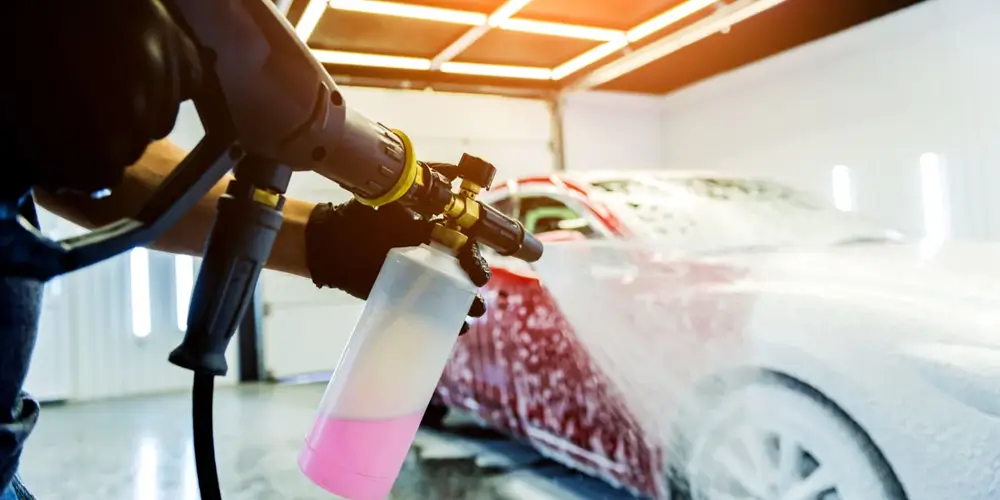
Wash the vehicle with pH-balanced shampoo and dry. Photograph problem areas and note paint thickness if available. Identify repairs, re-sprays, and thin spots.
2. Decontaminate the surface
Use an iron fallout remover, adhesive tar remover, and a clay or synthetic clay mitt to remove bonded contaminants. Rinse and dry thoroughly. A decontaminated surface prevents abrasive embedding during compounding.
3. Test spot
Select a small, inconspicuous area. Apply the chosen compound with intended pad and machine at recommended speed. Evaluate correction, holograms, and pad/compound compatibility before full application.
4. Compounding (cutting)
Apply a small amount of cutting compound to the pad. Work in 2' x 2' panels. Use controlled passes at moderate pressure, maintaining pad rotation and adequate lubricant. Wipe residue with a clean microfiber and inspect for removed defects. Repeat until acceptable before moving to polishing.
5. Polishing (refining)
Switch to a finer polish and a less aggressive pad. Remove micro-marring and restore gloss with overlapping passes. The goal is to remove haze or light swirls left by compounding while building reflectivity. Wipe and inspect.
6. Finishing and wipe-down
Use a finishing polish or glaze as needed to maximize gloss. Conduct final wipe-down with an isopropyl alcohol (IPA) blend (commonly 10–15% IPA in water) to remove oils and reveal true surface condition before protection.
7. Protection (wax/sealant/coating)
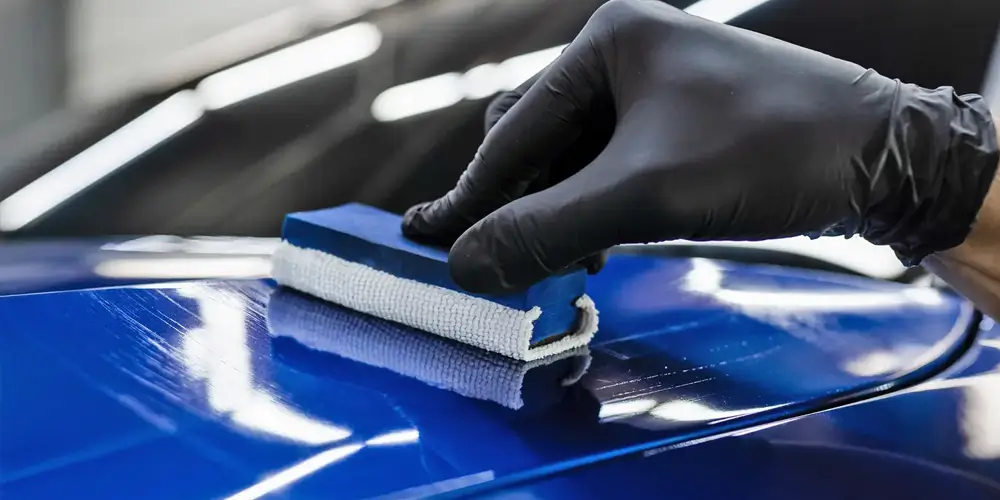
Apply a wax, synthetic sealant, or ceramic-enhanced protectant to lock in the finish. Follow product-specific cure times and application methods. This step completes the canonical compound wax polish steps sequence by delivering long-term protection and hydrophobic performance.
8. Final inspection and maintenance recommendations
Inspect under natural light and provide customers with maintenance advice: regular washing with pH-neutral shampoo, periodic sealant recharge, and avoidance of abrasive brushes.
Safety, quality control, and efficiency
1. Always wear PPE (gloves, eye protection) and ensure adequate ventilation when using solvent-containing products.
2. Maintain pad cleanliness — regularly clean or replace pads to avoid diminished cut and contamination.
3. Track consumable usage, product batch numbers, and operator settings for consistent quality and warranty support.
Why SYBON is the partner you want
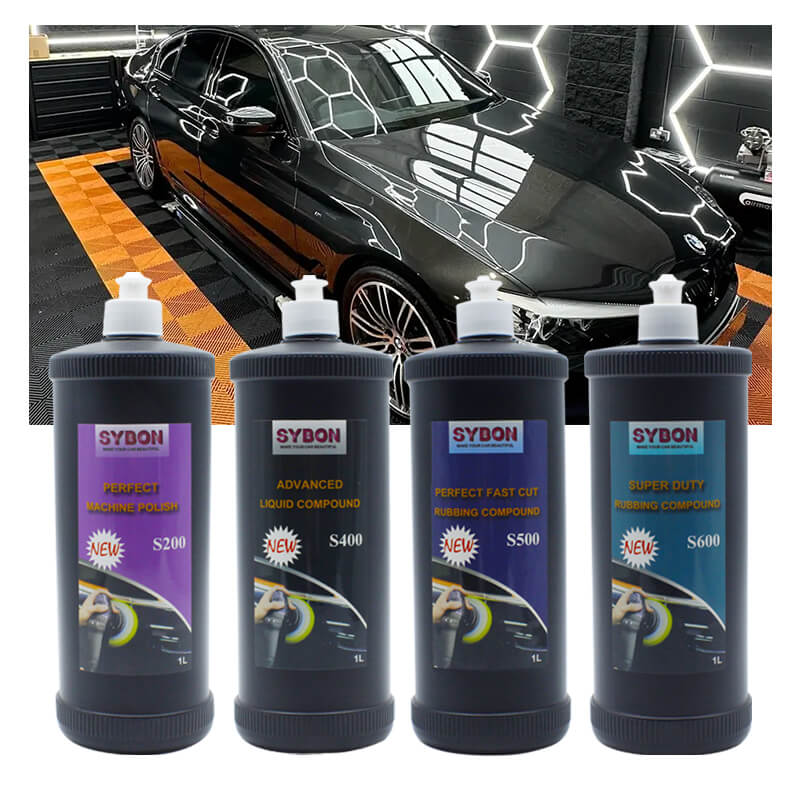
SYBON is a China-based professional manufacturer and distributor of polishing compounds and complementary automotive care products. We design formulations that deliver consistent cutting power, controlled refinement, and compatibility with typical pads and polishers. SYBON stands alongside major international brands in performance while offering significantly better value for distributors and resellers.
1. Performance parity: SYBON products are engineered to achieve results comparable to leading brands across compounding, polishing, and finishing categories.
2. Cost-effectiveness: Competitive wholesale pricing improves margin potential for dealers, auto shops, and regional distributors without sacrificing product quality.
3. Range and supply: We manufacture a broad portfolio — from heavy cutting compounds and wool pads to fine polishes, finishing glazes, and protective sealants — enabling full-service automotive detailing solutions from a single supplier.
4. Customer support & samples: SYBON welcomes sample requests for product testing. We encourage potential distributors, agents, paint-shop owners, and fleet managers to evaluate product performance in real-world workflows.
5. Global distribution & partnership: SYBON is actively recruiting global agents and distributors. Partnering with SYBON provides access to high-performance formulations, marketing support, and attractive wholesale terms.
If you are an agent, paint-shop owner, repair center manager, or distributor interested in purchasing bulk or testing samples, please contact us through the SYBON website contact form and send your inquiry by email. We commit to respond within 24 hours and to provide the technical documentation, sample packs, and commercial terms necessary to evaluate a partnership.
Adopting robust, repeatable compound wax polish steps protects your reputation, improves customer satisfaction, and lowers rework. With SYBON as your supplier, you gain a partner who understands the technical demands of modern paint correction and the commercial pressures of distribution — high-quality compounds and reliable service at a competitive price point to help you open and win local markets.
Source of this article:https://www.sybonbest.com
Get to know us through more channels: