
Understanding the difference rubbing polishing compound — industry guidance and why SYBON is the supplier you need
In automotive paint correction and surface restoration, clarity about the difference rubbing polishing compound is essential for technicians, detailers, paint-shop owners, and distributors. The phrase “difference rubbing polishing compound” commonly refers to the distinctions between rubbing (heavy-cut) compounds and polishing (fine-cut) compounds: their abrasive grades, intended uses, application techniques, and how they fit into a professional multi-step paint-correction workflow. Below is a concise industry primer followed by a practical introduction to SYBON — a China-based polishing compound supplier offering professional-grade performance with competitive pricing and global distribution ambition.
Industry overview: what the phrase means and why it matters
Rubbing compound and polishing compound are both abrasive formulations engineered to remove paint defects, but they occupy different roles:
Rubbing compound (heavy-cut, compounding stage)
1. Purpose: Rapid removal of heavy surface defects — oxidation, heavy scratches, industrial fallout, heavy swirl marks, and severe clear-coat degradation.
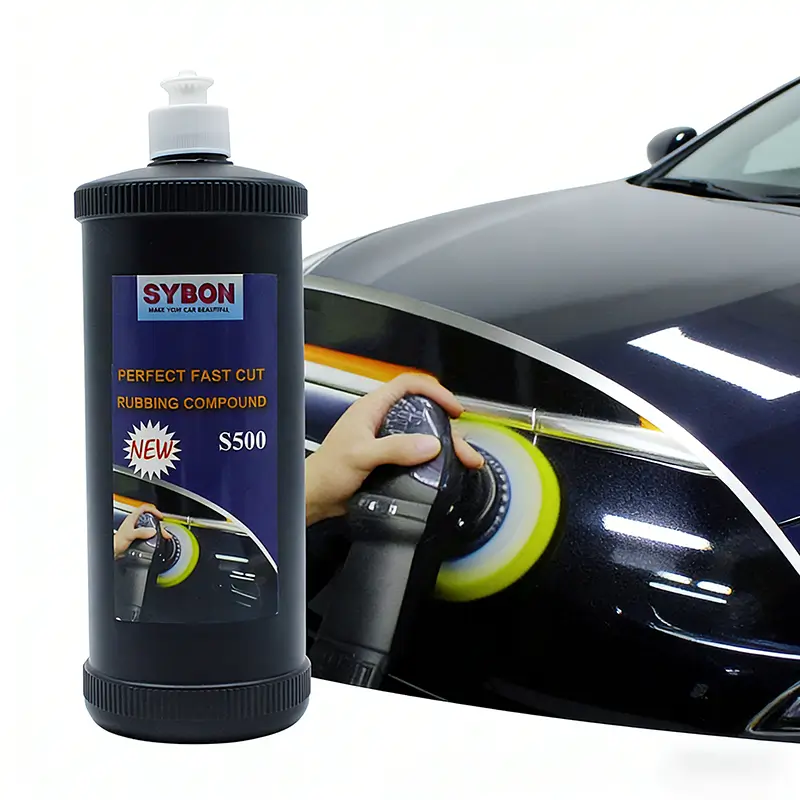
2. Abrasive action: Uses coarser abrasives and higher cutting power per pass. Cuts deep and fast, which reduces time spent on severe defects but increases the need for careful control to avoid burn-through or visible sanding marks.
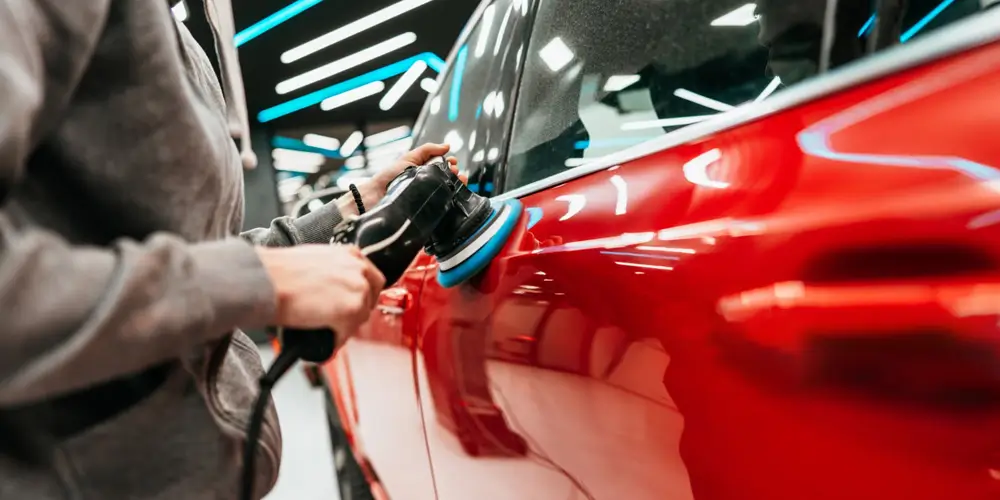
3. Typical form: Pastes or gels formulated to stay on the pad and dissipate heat less quickly; often used with wool or aggressive foam pads and rotary/dual-action polishers at moderate-to-high speeds.
Polishing compound (refining stage)
1. Purpose: Refines the surface after compounding to remove haze, micro-marring, and to restore gloss and clarity. Polishing compound corrects the finer defects left by rubbing compounds and prepares the finish for sealants or waxes.
2. Abrasive action: Finer abrasives, lower cutting power, higher finishing ability. Designed to leave a mirror-like gloss with minimal holograms or swirl.
3. Typical form: Creams, fine pastes or liquids, compatible with soft foam pads or finishing microfibre pads, used at controlled speeds with careful heat management.
Understanding the difference rubbing polishing compound is not academic: manufacturers, distributors, and technicians rely on that knowledge to specify correct product sequences, choose compatible pads and machines, and to provide consistent end-user results. Using a polishing compound where a rubbing compound is required will prolong correction time and may leave defects; conversely, using a rubbing compound as a final step will remove gloss and leave haze.
Practical workflow and best practices
A standard, professional paint-correction sequence often follows these stages:
1. Inspection and testing on a small, inconspicuous area to select cut/finish balance.
2. Compounding (rubbing compound) to remove deep defects and level the surface. Monitor heat and pad loading.
3. Refining (polishing compound) to erase micro-marring and restore gloss.
4. Final finishing with ultra-fine polish or glaze if required, then protection (sealant, ceramic coating, wax).
Key best practices:
1. Always perform a small test to confirm compatibility with the vehicle’s paint system.
2. Use progressively finer abrasives — do not skip from heavy compounding directly to protection.
3. Control pad speed and pressure; excessive heat risks clear-coat damage.
4. Use correct pad types (wool/aggressive foam for rub, soft foam/ microfiber for polish).
5. Keep work area and components clean to avoid contamination and scratching.
Choosing products: formulation and performance indicators
When evaluating rubbing vs. polishing compounds, consider:
1. Abrasive type and particle size (aluminum oxide, silica blends, etc.).
2. Carrier formulation (viscosity, lubrication) that affects pad loading and heat transfer.
3. VOC and user-safety characteristics — safer formulations reduce fumes and skin irritation.
4. Finish index — how well the compound transitions from cutting to gloss. Many professional suppliers publish technical datasheets that quantify cutting vs finishing balance.
Why SYBON — professional quality, better value
SYBON is a China-based polishing compound supplier that produces a comprehensive line of compounding and polishing products engineered for professional use. SYBON’s value proposition is rooted in three pillars:
1. Comparable performance to major brands
SYBON formulations are designed to deliver similar cutting power and finishing clarity to leading-brand products while maintaining consistency across production batches. This makes SYBON suitable for automotive dealerships, body shops, detailers, and fleet maintenance operations that require dependable results.
2. Competitive pricing and wholesale support
SYBON positions itself as a cost-effective alternative for agents, distributors, and dealers. Wholesale and bulk-pack options are available to help partners achieve higher margins without sacrificing product quality—an important advantage for businesses seeking to enter or expand in competitive local markets.
3. Service and distribution for trade customers
SYBON supports international agents and distributors with sample programs, technical documentation, and post-sale support. The company actively seeks global partners and offers product training guidance to ensure end-users apply rubbing and polishing compounds correctly and achieve consistent finishes.
Call to action for distributors and trade buyers
If you are an automotive detailer, paint-shop owner, distributor, or procurement manager seeking a professional polishing compound supplier that balances performance and price, SYBON invites you to request product samples for evaluation. SYBON supplies a full range of heavy-cut rubbing compounds and finish-grade polishing compounds tailored to multiple workflows and paint systems. To request samples or discuss distribution terms, please contact SYBON through the company website’s contact form or email portal; a representative will respond within 24 hours to arrange samples and provide commercial details.
Understanding the difference rubbing polishing compound is fundamental to offering professional paint-correction services and to choosing the right supplier. SYBON combines industry-grade formulations with wholesale-friendly pricing and trade-focused service—positioning itself as a practical, high-value partner for businesses that require both performance and profitability. If your business is expanding its automotive care offering or seeking a reliable supplier for compounding and polishing lines, SYBON is ready to support your commercial objectives.
Source of this article:https://www.sybonbest.com
Get to know us through more channels: